
Think of a sea of panels bending toward the sun, with a few signatures from lawmakers on each acre. Big incentives are what make large scale solar power flourish, and the government decides how fast (or slowly) those fields grow.
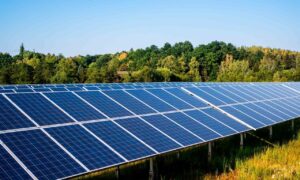
Who is the heavyweight champion? The federal government gives out tax credits. For a long time, the Investment Tax Credit (ITC) has been the solar industry’s best friend in the US. It lowers the cost of constructing by 30%. That’s a lot of money for developers—enough to make decisions worth billions of dollars. If you roll the clock forward, you’ll see Congress extending, ratcheting, and rewriting these credits to keep things moving.
Renewable Portfolio Standards (RPS) are helping some states move faster toward adopting more renewable energy. People don’t only set these rules; they are the law. Utilities have to receive some of their power from renewable sources, or else they will have to pay a fee. What happened? Utilities are in a hurry to meet their goals, and solar fields are popping up all over the place.
Grants also help. State and federal entities, like the Department of Energy, grant money for research, test programs, and system upgrades. More money means more testing, more discoveries, and more digging in the ground.
Don’t forget about net metering and feed in tariffs. Net metering lets solar producers get credit for the power they send back to the grid. When you use feed-in tariffs, you can “set it and forget it” when it comes to making money because the rates are locked in for a long time. If you want to make money that stays the same, these two qualities make solar a viable investment.
It may seem monotonous to change the permitting procedure, but it might save months or even years off of project schedules by making it quicker to secure a permit or connect to the grid. California, for instance, established rules that made it easier and quicker to acquire permission for solar and storage projects. You could say it was a race to get rid of red tape because other states did the same thing.
The sun getting hotter doesn’t make solar fields develop in the end. They proceed rapidly because lawmakers made the rules and kept track of the score. When you see a solar farm shining on the horizon, think of the paper trail that goes with it. It has both sunshine and labor for the government.